

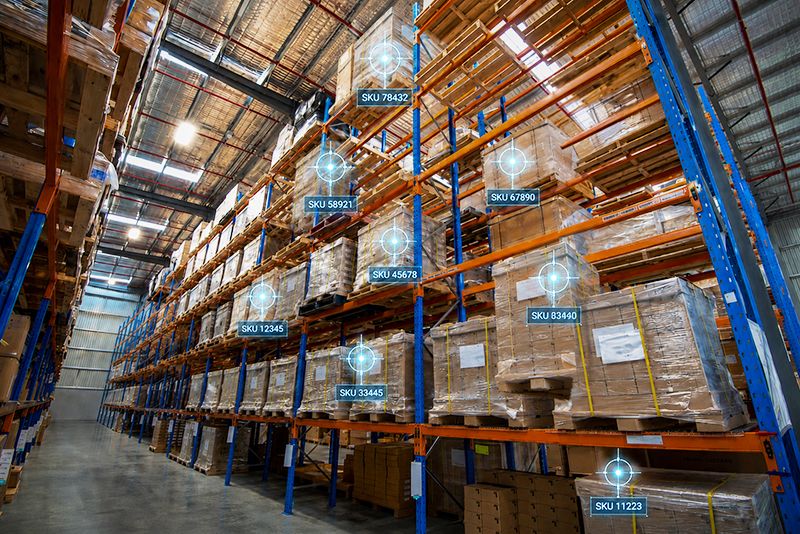
What Is a Warehouse Management System?
A Warehouse Management System (WMS) is software that manages the movement, storage, tracking, and fulfillment of inventory within a warehouse or distribution center. By providing real-time visibility into inventory and warehouse activity, a WMS helps businesses improve accuracy, increase productivity, and streamline order fulfillment.
More than an inventory database, a modern Warehouse Management System serves as the operational control center of a warehouse. It connects inventory, employees, equipment, and workflows into a single platform, allowing managers to make informed decisions while giving warehouse teams the information they need to work efficiently.
Whether an organization ships hundreds of orders a week or tens of thousands a day, a WMS creates the structure needed to maintain accuracy, reduce costs, and support long-term growth.
Why Businesses Use Warehouse Management Systems
Every warehouse performs a series of interconnected tasks. Inventory is received, stored, replenished, picked, packed, shipped, and sometimes returned. As operations grow, coordinating these activities becomes increasingly difficult.
Without a centralized system, inventory records can quickly become unreliable, employees spend valuable time searching for products, and managers have limited visibility into what is happening on the warehouse floor. Even small inefficiencies compound over thousands of transactions, increasing labor costs and reducing customer satisfaction.
A Warehouse Management System addresses these challenges by creating a single source of operational truth. Every inventory movement is recorded as it happens, allowing warehouse teams to work from current information instead of spreadsheets, printed reports, or manual updates.
The result is a warehouse that is easier to manage, more predictable to operate, more efficient, and better equipped to handle increasing order volume.
The Primary Goals of a Warehouse Management System
Organizations implement warehouse management software for different reasons, but most deployments are built around four core objectives.
Improve Inventory Accuracy
Accurate inventory is the foundation of efficient warehouse operations. Purchasing decisions, customer service, replenishment, fulfillment, and reporting all depend on knowing exactly what inventory is available and where it is located.
By recording inventory transactions in real time, a WMS reduces discrepancies and provides greater confidence in day-to-day decision making.
Increase Warehouse Efficiency
Warehouse productivity is influenced by hundreds of small decisions throughout the day. Travel distance, storage location, order prioritization, and workflow consistency all affect how quickly orders move through the facility.
A Warehouse Management System standardizes these processes while providing managers with the operational data needed to identify bottlenecks and improve performance over time.
Reduce Fulfillment Errors
Every incorrect shipment creates additional labor, transportation costs, and customer service issues. Warehouse management software helps reduce these mistakes by validating inventory throughout the fulfillment process and ensuring employees follow consistent workflows.
The result is greater order accuracy and a better customer experience.
Support Business Growth
Many organizations discover that manual processes work well until they don’t. Additional customers, larger product catalogs, multiple facilities, and increasing order volume create operational complexity that spreadsheets and disconnected systems struggle to manage.
A WMS provides the visibility and process control necessary to scale operations without sacrificing accuracy or service levels.
Key Benefits of Warehouse Management Software
While every warehouse has unique requirements, organizations that implement a Warehouse Management System often experience improvements across several areas of their business.
Greater operational visibility
- Real-time inventory information
- Immediate access to order status
- Better insight into warehouse activity
- More informed operational decisions
Higher inventory accuracy
- Fewer inventory discrepancies
- Better product traceability
- More reliable replenishment planning
- Reduced stockouts and over ordering
Improved productivity
- Standardized warehouse workflows
- Reduced manual data entry
- More efficient use of warehouse labor
- Better utilization of warehouse space
Better customer service
- More accurate shipments
- Faster order fulfillment
- Increased order visibility
- More reliable delivery performance
Rather than solving a single operational problem, a Warehouse Management System creates a framework for continuous improvement across the warehouse.
Who Uses Warehouse Management Systems?
Warehouse Management Systems are used by organizations anywhere inventory is stored, managed, or distributed. While operational requirements vary by industry, the need for visibility, accuracy, and efficient workflows is nearly universal.
Common users include:
- Third-party logistics providers (3PLs)
- Wholesale distributors
- Manufacturers
- Ecommerce fulfillment operations
- Food and beverage companies
- Pharmaceutical distributors
- Apparel companies
- Retail distribution centers
As supply chains become more complex and customer expectations continue to increase, warehouse management software has become a foundational business system rather than a specialized operational tool.
Signs Your Business May Need a Warehouse Management System
Not every warehouse requires sophisticated software, but recurring operational challenges often indicate that existing processes have reached their limits.
Your organization may benefit from a WMS if you regularly experience:
- Inventory discrepancies that require manual investigation
- Employees spending excessive time locating products
- Shipping errors or incorrect orders
- Growing labor costs without corresponding productivity gains
- Limited visibility into warehouse performance
- Difficulty scaling operations as order volume increases
- Multiple systems that require duplicate data entry
These challenges rarely exist in isolation. They are often symptoms of warehouse processes that have become too complex to manage efficiently without dedicated warehouse management software.
Warehouse Management Systems as a Competitive Advantage
For many organizations, the decision to implement a Warehouse Management System begins with a specific problem such as inventory accuracy or fulfillment errors. Over time, however, the value extends far beyond solving an immediate operational challenge.
A WMS provides the visibility needed to make better decisions, the consistency required to standardize warehouse processes, and the operational intelligence necessary to continuously improve performance.
As warehouses adopt automation, robotics, artificial intelligence, and increasingly sophisticated fulfillment strategies, the Warehouse Management System remains the platform that connects those technologies and turns operational data into actionable information.
Businesses that invest in warehouse management software are not simply implementing another application. They are building the operational foundation that supports efficient, scalable, and customer-focused distribution.
Frequently Asked Questions About Warehouse Management Systems
How is a Warehouse Management System different from inventory management software?
Inventory management software primarily tracks inventory quantities and availability. A Warehouse Management System goes further by coordinating warehouse workflows, managing inventory movement, improving fulfillment processes, and providing operational visibility across the entire facility.
Can a small business benefit from a Warehouse Management System?
Yes. While large distribution centers often have the most complex requirements, growing businesses frequently benefit from implementing warehouse management software before manual processes become a barrier to expansion. The right solution depends on inventory volume, order complexity, and operational goals rather than company size alone.
Does a Warehouse Management System replace an ERP?
No. An ERP manages business-wide functions such as finance, purchasing, accounting, and customer information. A WMS specializes in warehouse operations and is commonly integrated with an ERP so information flows between both systems.
Is a Warehouse Management System only for companies with multiple warehouses?
No. Even organizations operating a single warehouse can improve inventory accuracy, productivity, and fulfillment performance with a WMS. Multiple locations increase operational complexity, but they are not a requirement for warehouse management software.
What should businesses look for when choosing a Warehouse Management System?
The best Warehouse Management System is one that aligns with current operations while supporting future growth. Important considerations include real-time inventory visibility, configurable workflows, integration capabilities, reporting, scalability, implementation support, and the ability to adapt to changing business requirements instead of forcing operations into rigid processes.
How does a Warehouse Management System improve customer satisfaction?
Accurate inventory, efficient picking, and standardized fulfillment processes reduce shipping errors and help orders leave the warehouse faster. Better operational visibility also allows customer service teams to provide more reliable information about inventory availability and order status, resulting in a more consistent customer experience.